I am Emmanuel Chimezie.
A Computer Engineer
I specialize in engineering structured prompt frameworks and building full-stack AI software applications. By combining computer engineering fundamentals with advanced generative workflows, I turn raw model capabilities into intuitive, user-ready applications.

About Me
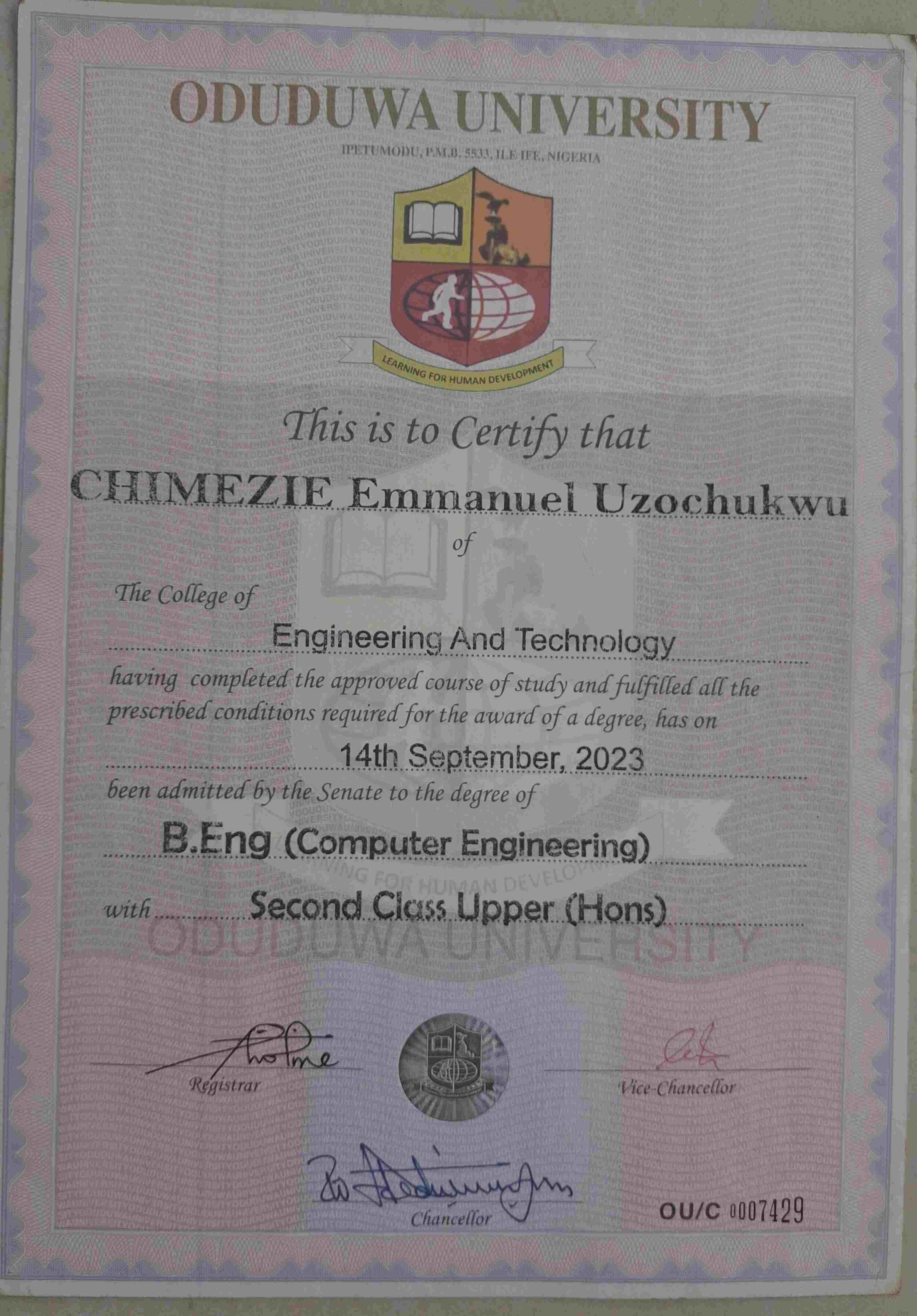
Holding a B.Eng. in Computer Engineering from Oduduwa University, I specialize in prompt engineering, LLM logic design, and full-stack AI application development. My work centers on translating functional user needs into precise system prompts, agentic workflows, and production software applications.
From AI-moderated social debate software to multi-agent generative visual pipelines and multi-service aggregator apps, I use modern vibe coding, structured frameworks, and rapid prototyping tools to turn abstract ideas into fully operational digital products.
Location & Availability
Abuja, Nigeria (WAT / GMT+1) · Global Remote
Technical Expertise
APEX — SYSTEM PROMPT ARCHITECTURE & INTELLIGENCE
System Prompts · Agentic Workflows · Context Guardrails · Fallacy Logic
CORE — AI APPLICATION DEVELOPMENT & FULL-STACK
TypeScript · Node.js · Vibe Coding · Supabase · Modern Web Backends
FOUNDATION — COMPUTER ENGINEERING & SYSTEMS
Hardware Diagnostics · Technical Operations · Data Networks · Problem Solving
Featured AI Applications
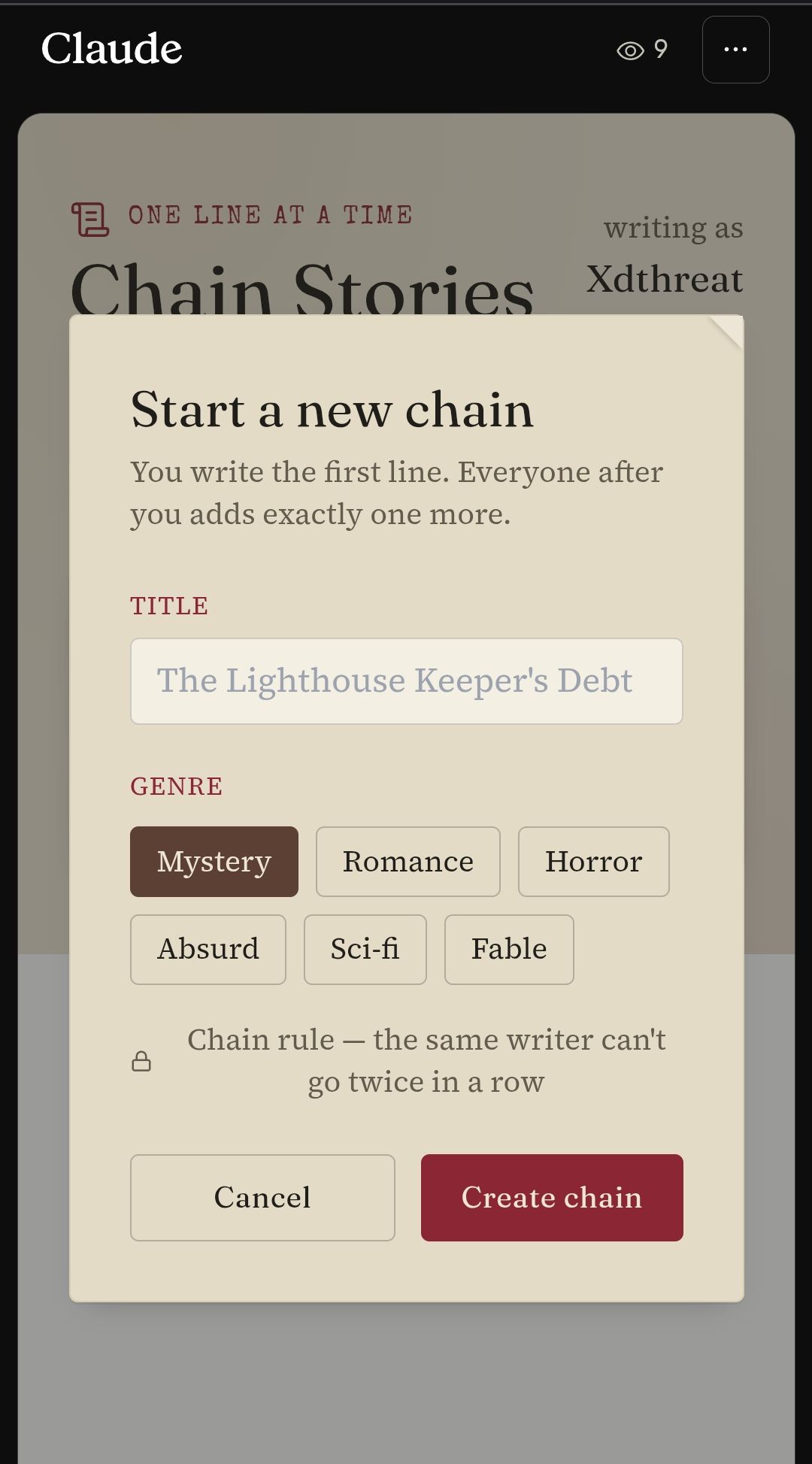
Chain Stories — One Line at a Time
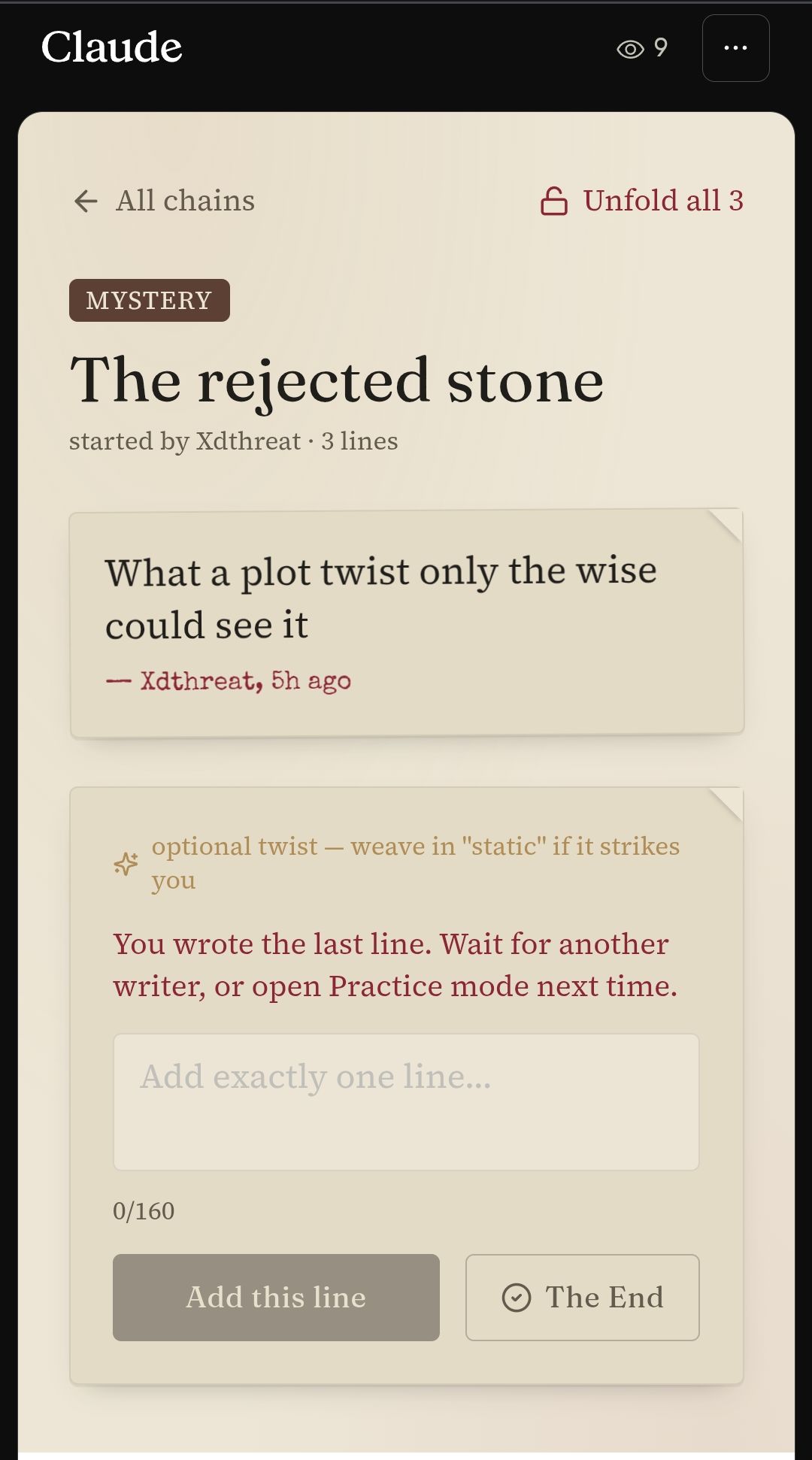
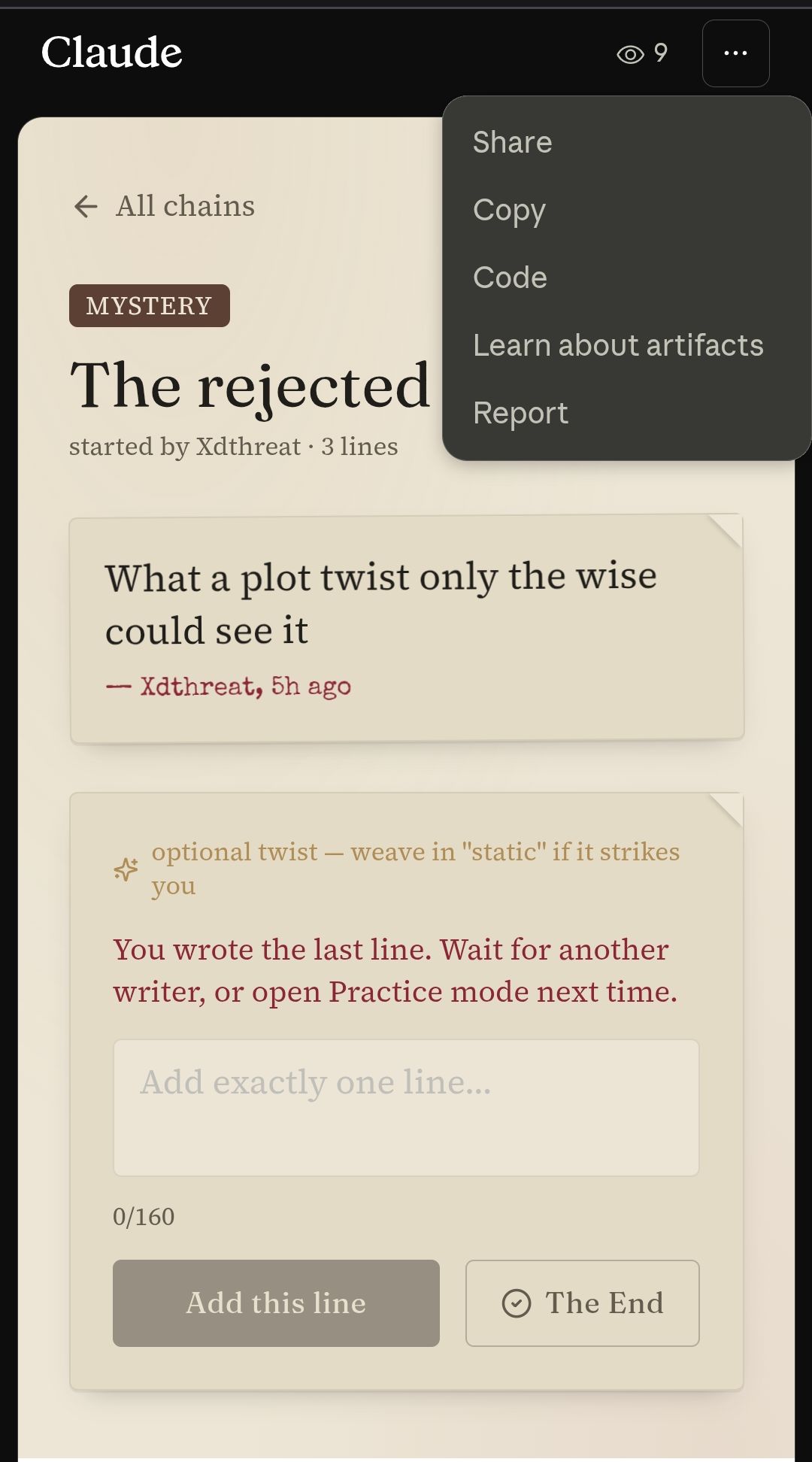
LIVE PROTOTYPE- Collaborative storytelling where each person adds exactly one line to a shared chain — “Sign the corner” with a unique lowercase username, then leave a line for the next writer to find. Paper-inspired UI with Timeline and Archives views.
- Chains inactive for 30+ days move to Archives (or are deleted if under 5 lines). Built as a lightweight React app with a custom paper/ink design system, focused on the simple joy of passing a story forward one strip of paper at a time.
How It Was Built
Core Concept & Mechanics
A React web app for collaborative, one-line-at-a-time storytelling. Writers “Sign the corner” with a unique lowercase username (letters only, no spaces, numbers, or symbols), then leave a single line for someone else to find and continue. The experience is framed like strips of paper passed hand to hand — calm, intentional, and deliberately limited to one line per turn.
Identity & Access
Unique author handles are required and can be changed later. The live prototype focuses on lightweight identity and shared chain state rather than full account systems, keeping the barrier to writing as low as possible.
Tools & Stack
React + Vite, custom paper/ink CSS design system (warm paper backgrounds, seal-red accent, Fraunces / Source Serif 4 typography), and browser storage for local profiles and shared chains. Deployed on GitHub Pages.
Key Features (Live)
- Sign the corner — Onboarding to pick a unique lowercase author name before writing.
- One line at a time — Each contribution is a single line; the next writer continues the chain.
- Timeline — Active chains visible for others to find and extend.
- Archives — Chains inactive 30+ days move to Archives; under 5 lines may be deleted.
- Paper UI — Soft cream paper surfaces, folded-card feel, and a restrained seal-red accent.
- Guide & Board — Supporting views for orientation and shared activity.
Key Challenge Solved — Keeping Collaboration Simple and Human
Challenge: Most collaborative writing tools become complex dashboards or free-form editors that lose the intimacy of passing a story along.
Solution: Strict one-line turns, a paper metaphor, unique author handles, and an automatic archive lifecycle keep the product focused on the act of writing for the next person — not on managing accounts, permissions, or long-form drafts.
Scope Note
Current live build prioritizes the core loop (sign → write one line → discover on timeline → archive). Richer product directions (AI line scoring, cinematic Watch mode, invite-only Premium chains, full auth) remain on the roadmap and are described in earlier design notes; they are not all active on the public GitHub Pages deployment.
The Lazy App — Multi-Service Aggregator
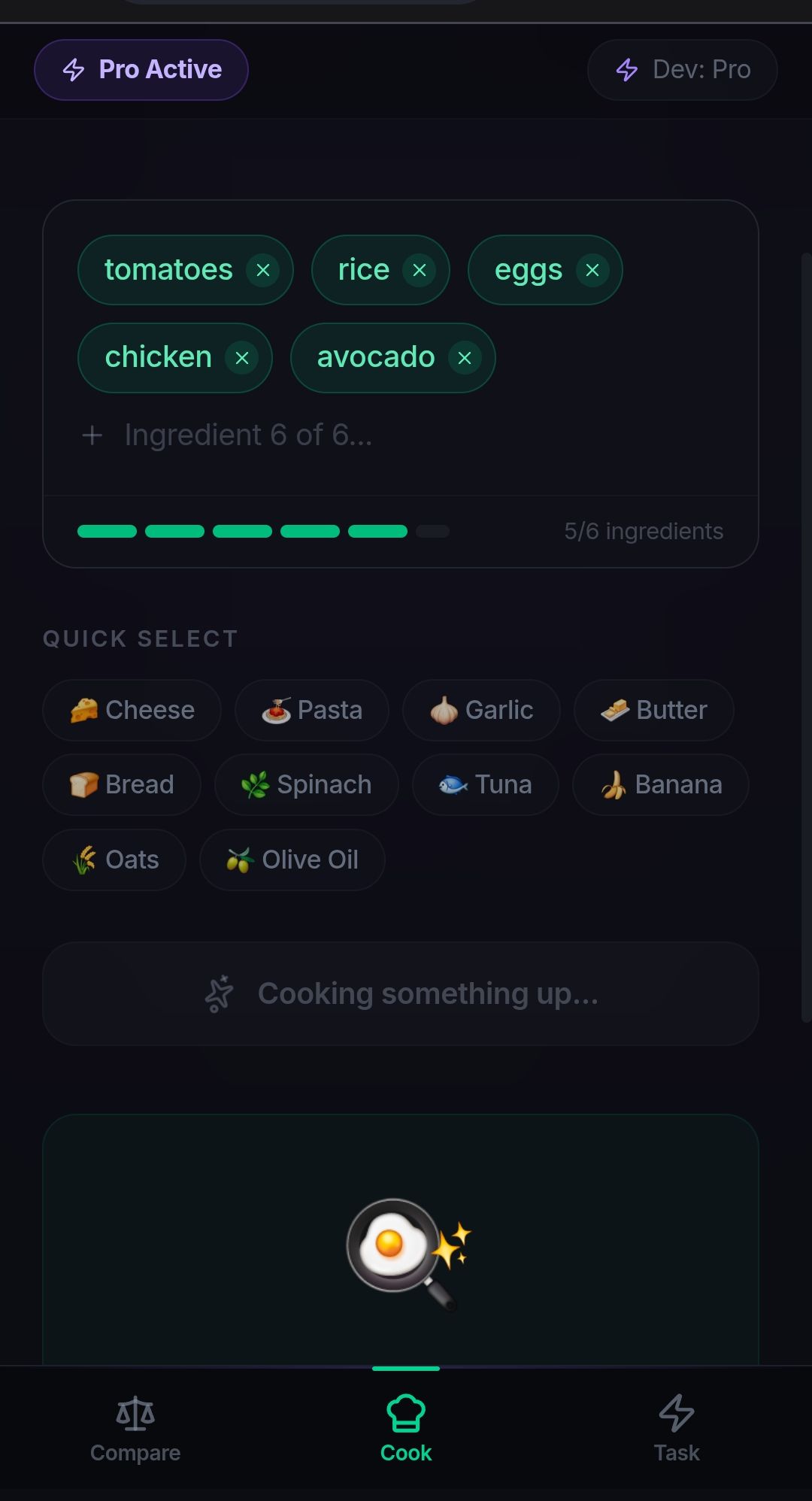
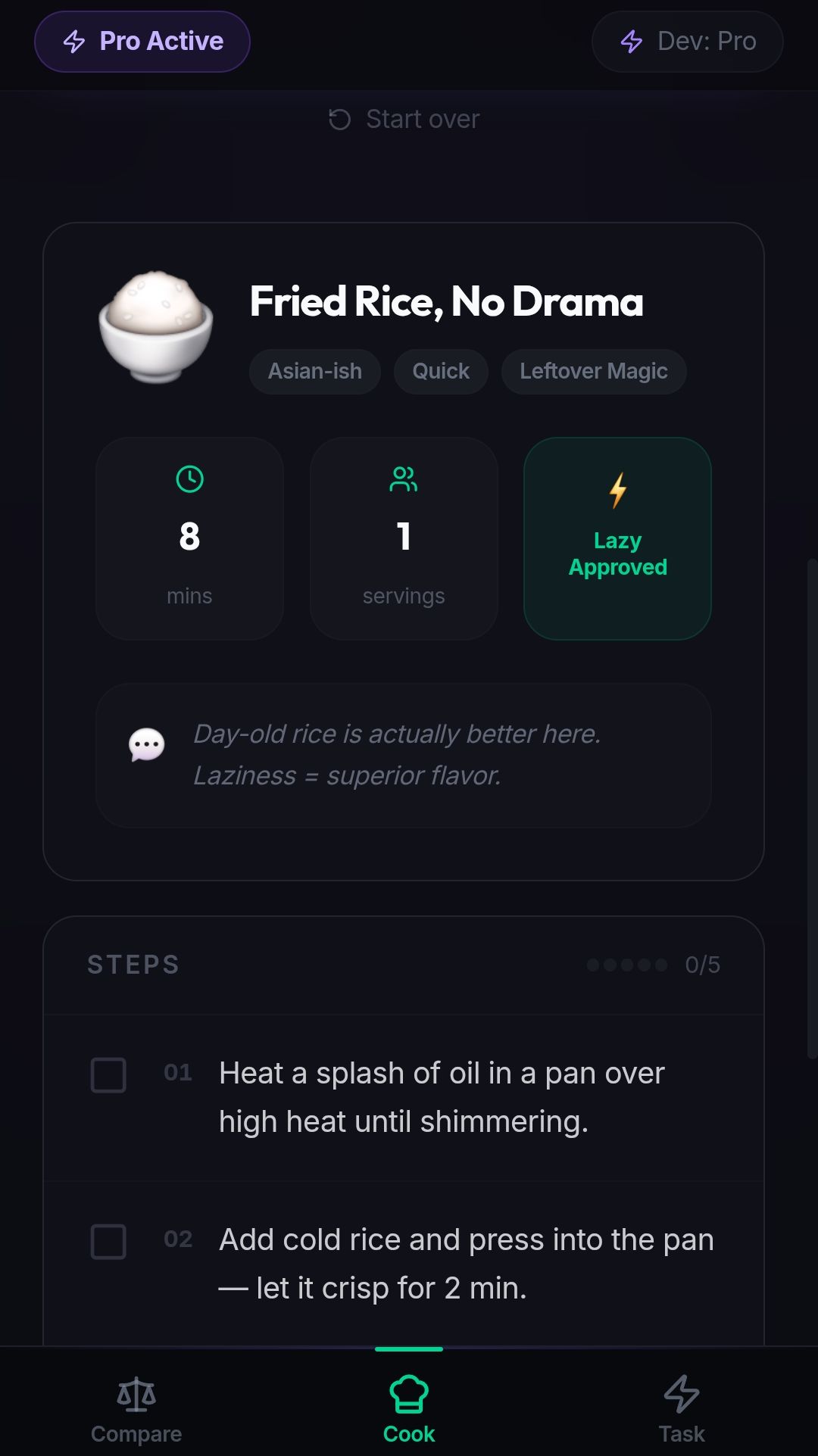
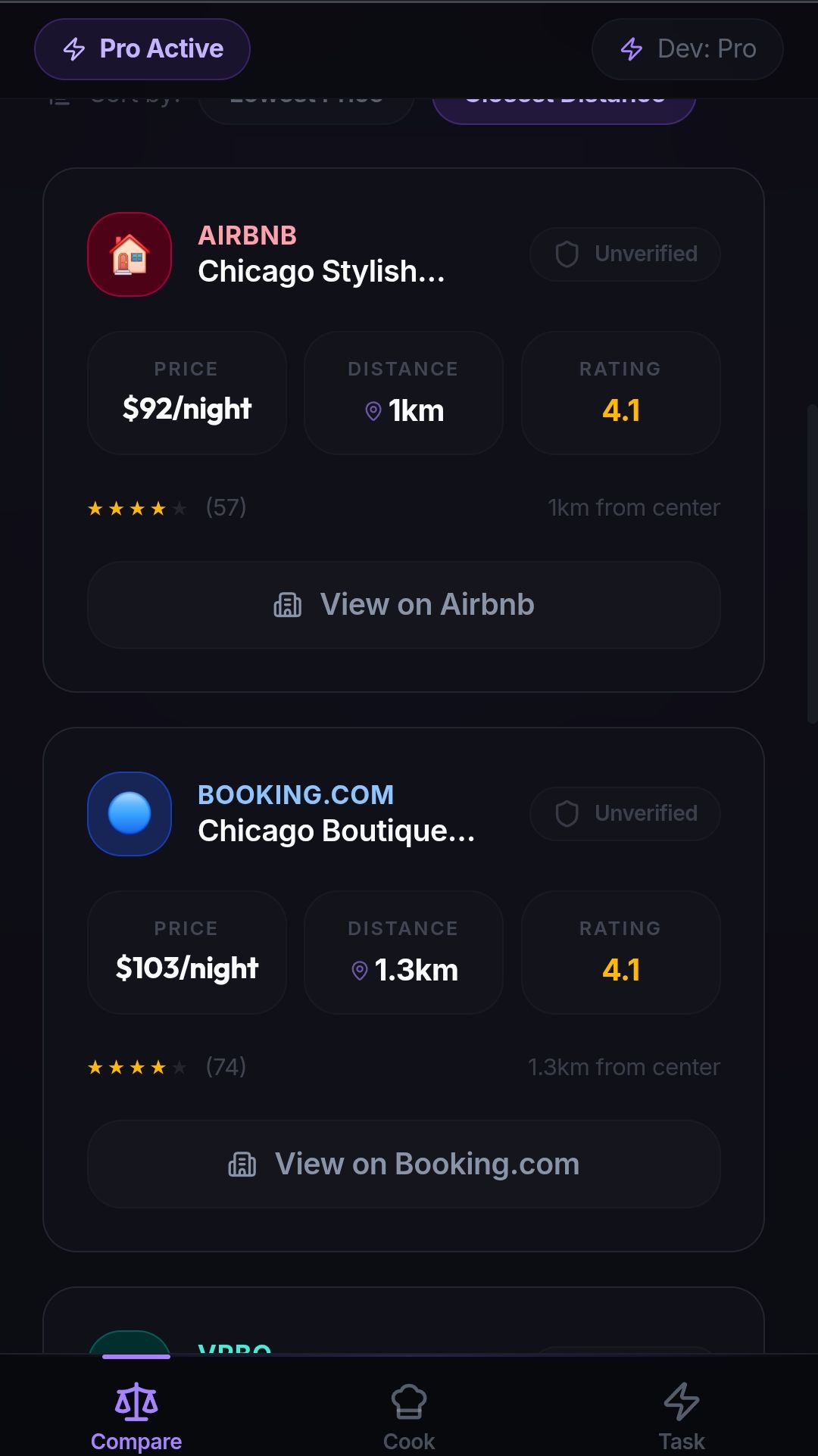
PROTOTYPE- Cross-references apartments, travel, delivery, dispatch, and professional services in one dashboard — matched to the user's own taste and budget.
- Every listing shows its real service provider; selecting one redirects out to that provider's page to complete the actual booking or transaction.
How It Was Built
Tools & Stack
Built with a React / Node.js frontend, using Supabase (PostgreSQL + Auth) as the backend database, rapidly prototyped by generating and refining modular UI components via Claude Artifacts.
Integrations
Integrated third-party REST APIs into a unified middleware layer to aggregate, parse, and render service data within a single user dashboard. Spans multiple categories — apartments, travel, delivery, dispatch, and professional services — letting users cross-reference options against their own taste and budget in one place. Each result surfaces its actual service provider, and selecting one redirects the user to that provider's site to complete the booking or transaction.
Role: Solo Full-Stack Developer
Managed the entire scope from API integration design and data transformation to UI components and serverless deployment.
Technical Decisions
- Unified API Normalization Layer — Built a client-side adapter pattern that transforms inconsistent third-party JSON responses into a single internal schema before passing data to UI components.
- Stale-While-Revalidate (SWR) Caching — Utilized aggressive client caching strategies to minimize unnecessary third-party API calls, drastically improving load speed and avoiding API rate limits.
- Zero-Compute Serverless Architecture — Kept infrastructure overhead near zero by deploying frontend assets to edge locations and relying on serverless edge functions for API routing.
Key Challenge Solved — Fragmented Service Access
Challenge: Users had to visit multiple separate websites and apps individually just to find and use the tools or services they needed — apartments, travel, delivery, dispatch, professional services — creating friction and wasted time across a fragmented set of destinations.
Solution: Built a single aggregator app that houses the functionality of multiple third-party services in one unified dashboard, letting users cross-reference options across categories against their own taste and budget to surface the best alternative. Each listing indicates its actual service provider, and clicking through redirects the user to that provider's page to complete the booking — the app handles discovery and comparison, not the transaction itself.
Debate & Poetry Arena — Dual-LLM Debate Platform
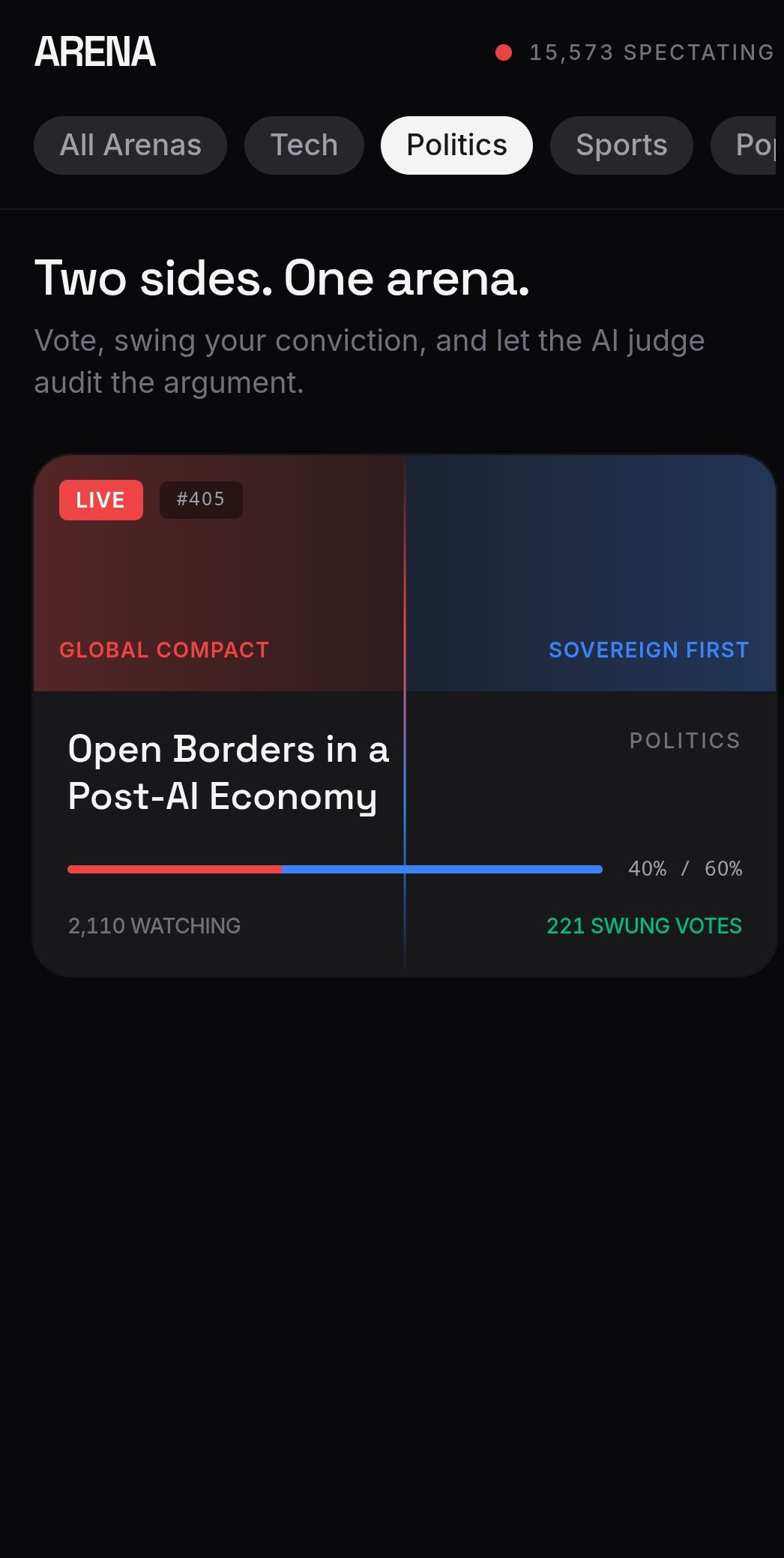
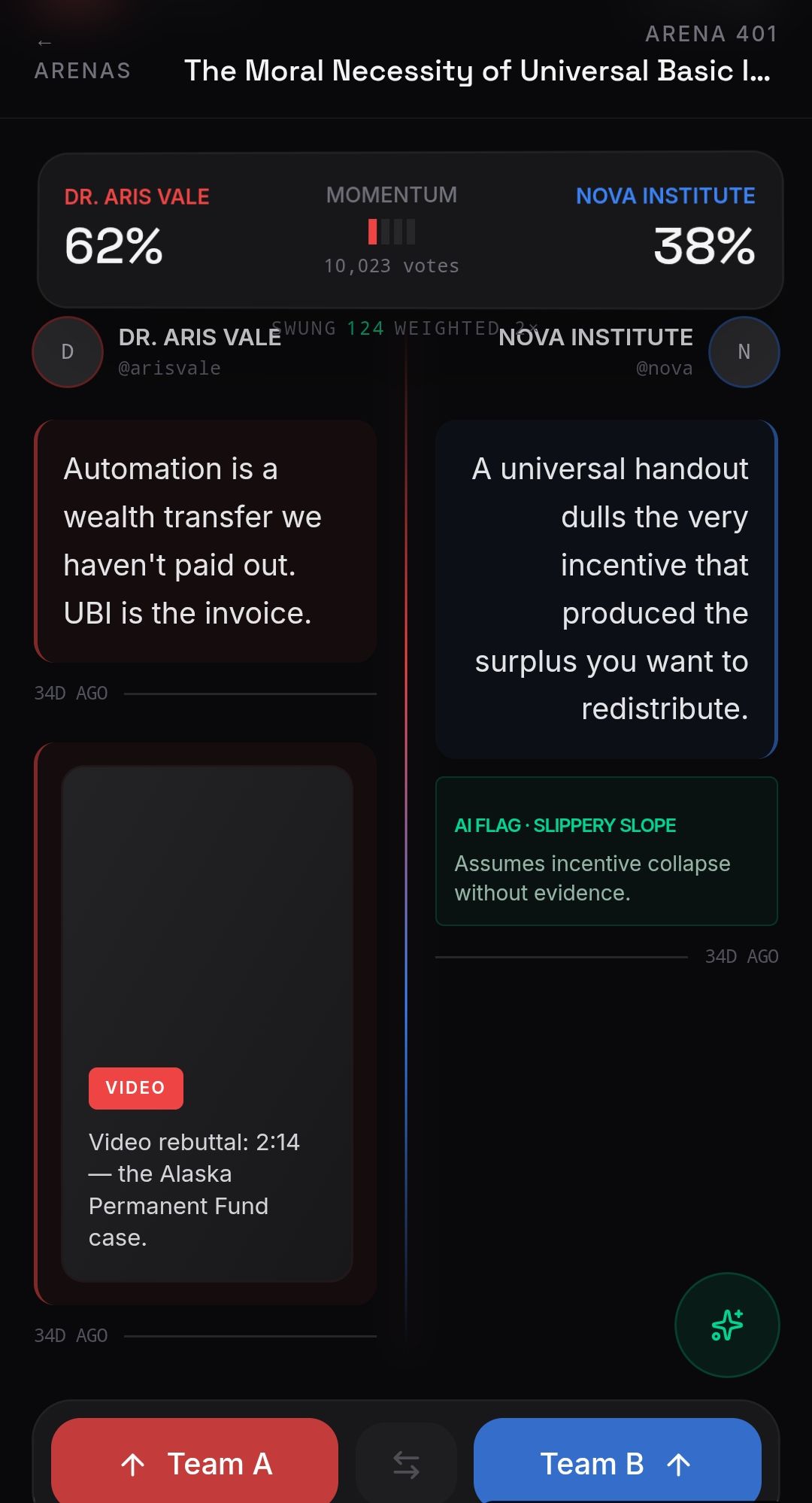
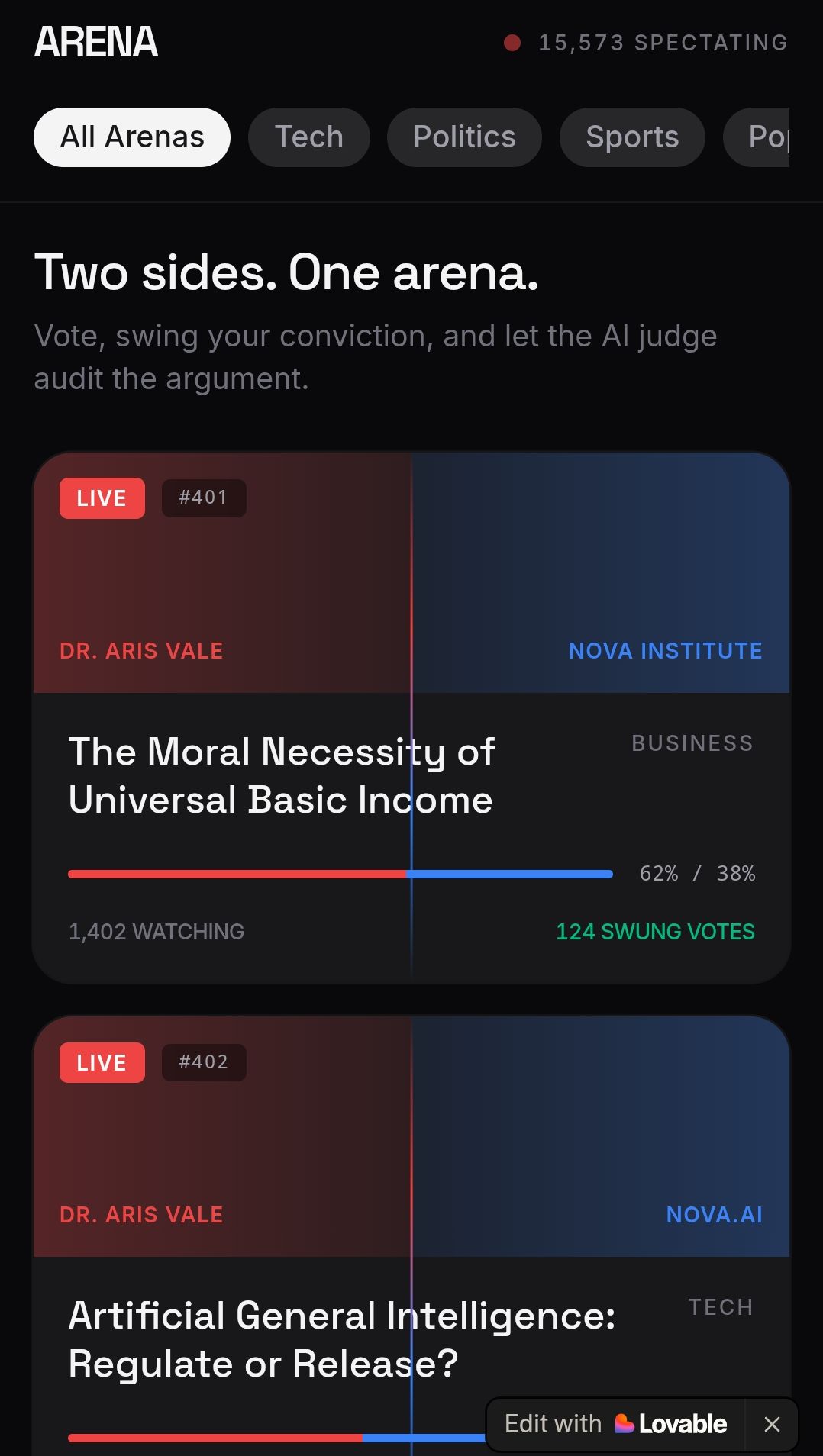
LIVE APPLICATION- Watch or host live, upcoming, past, and local debates — register by setting the topic, time, and scoring preferences in a few steps.
- Powered by a dual-LLM debate engine (Claude 3.5 Sonnet vs. GPT-4o) with real-time guardrails, plus live poetry challenges for spoken-word performers.
How It Was Built
LLM Engine & APIs
Powered by Anthropic Claude 3.5 Sonnet (selected for complex reasoning and structured rhythmic phrasing in poetry) working alongside OpenAI GPT-4o (configured as a fast, opposing debate persona).
Agent Orchestration & Communication
Built using a custom Python agentic workflow using state graphs rather than heavy third-party agent frameworks. The system coordinates turn-taking, dynamic response injection, and context passing sequentially via event-driven state nodes.
Frontend / Backend Stack
React / Next.js frontend with Tailwind CSS for dynamic turn visualization; Python (FastAPI) backend utilizing WebSockets for low-latency streaming of agent outputs.
Role: Lead AI Architect & Full-Stack Developer
Formulated the multi-agent orchestration architecture, prompt management system, real-time guardrails, and dynamic UI state sync.
Technical Decisions
- Sliding Context Window with Summarization — Preserved agent performance and lowered token costs by maintaining a rolling memory window that dynamically summarizes past rebuttal turns into compact system context.
- Intermediary Guardrail Node — Added a lightweight validation pass between turns to verify output format, catch repetitive phrasing, and enforce word-count boundaries before rendering responses to the client.
Key Challenge Solved — Debate & Poetry Accessibility
Challenge: Debates — live, upcoming, past, or local — and spoken-word poetry were scattered and hard to discover, leaving audiences with little consistent way to find and engage with them, and limiting how entertaining and far-reaching debate and poetry could actually be.
Solution: Built a platform where users log in, register for a debate by setting the time, topic, and scoring preferences, and can then watch live, upcoming, former, or local debates in one place — turning debate into an accessible, spectator-friendly experience. Extended the same platform to poetry with live poetry challenges, letting poets post and perform live online alongside the debate content.
Key Design Decision — Keeping Agents On-Topic & Distinct
Designed structural system prompts featuring explicit persona rules and objective constraints (e.g., "Address point B made by Opponent, limit rebuttal to two stanzas, and do not repeat arguments from Turn 1"). This prevented agents from losing topic context or slipping into passive agreement loops.
NFT Forge — Generative AI Art Platform
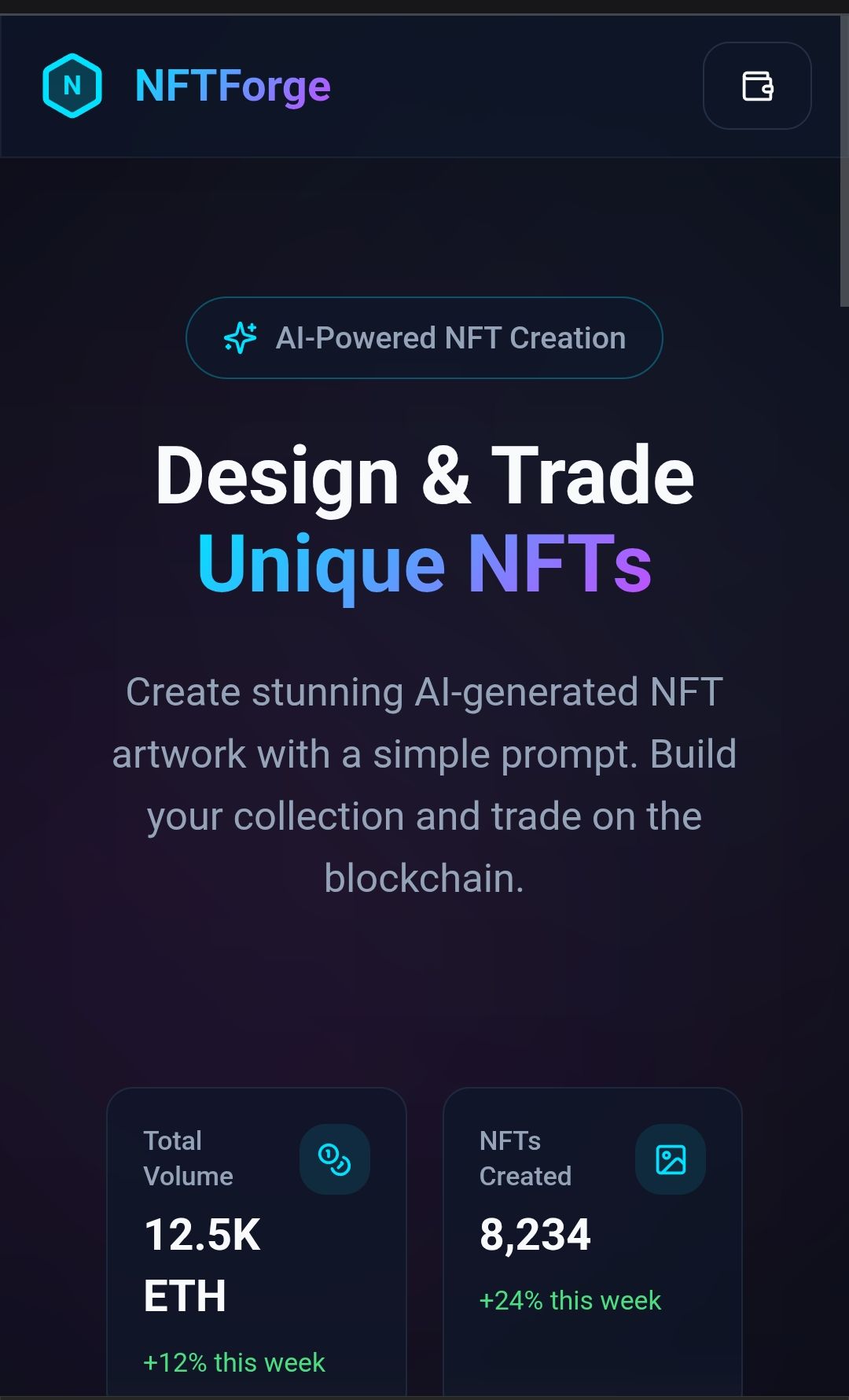
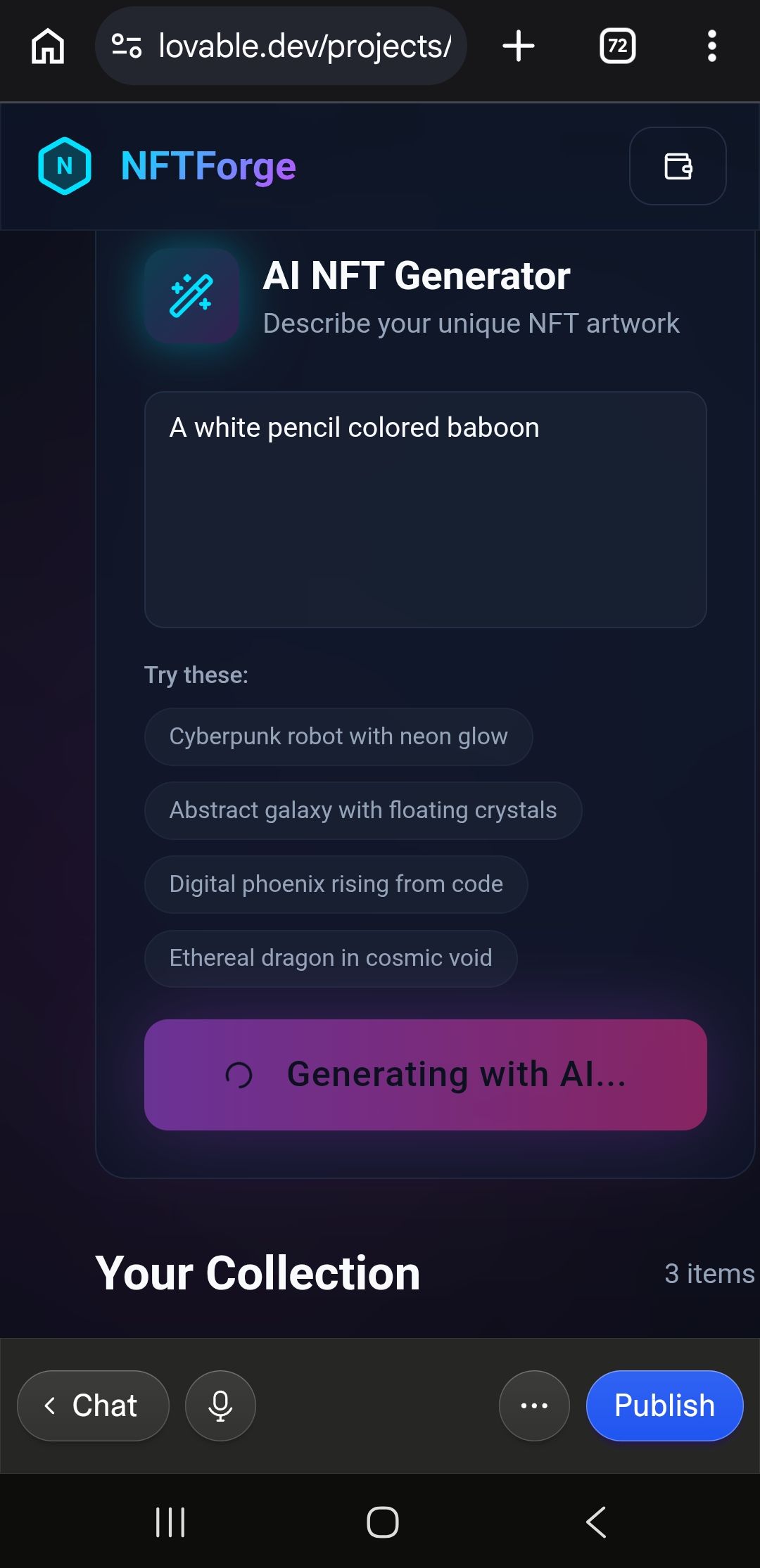
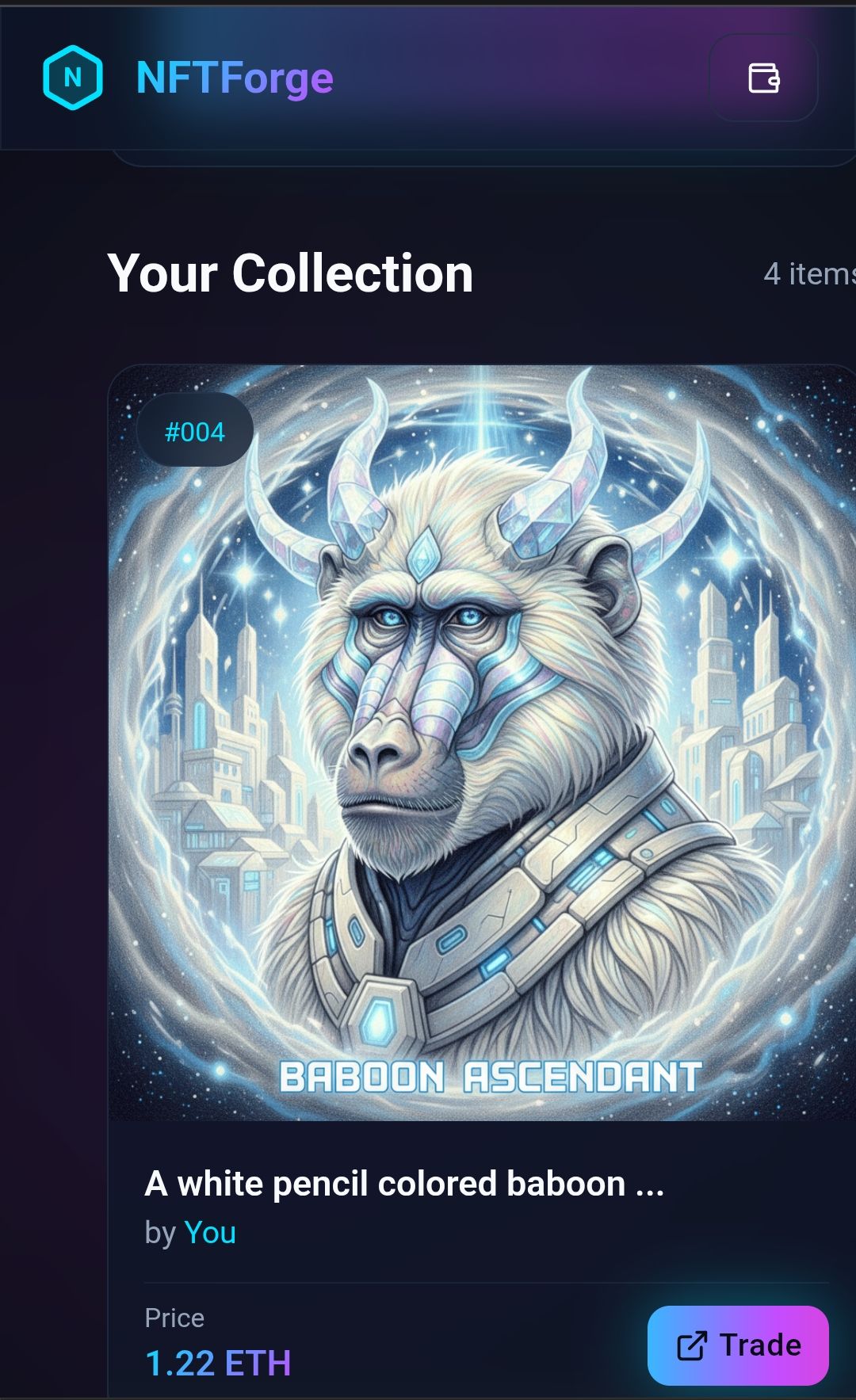
LIVE APPLICATION- Powered by Stable Diffusion APIs with a custom Python pipeline (Pillow & OpenCV) for post-processing, trait compositing, and seed variation control.
- Asynchronous worker queue (Celery & Redis) handles heavy model inference and batch rendering, with automated Web3 metadata generation before assets hit storage.
How It Was Built
Image Generation & Processing
Powered by Stable Diffusion model APIs for base image generation, combined with a custom Python pipeline using Pillow and OpenCV for image post-processing, trait compositing, and seed variation control.
Language & Framework Stack
Python (FastAPI) for the image generation pipeline and batch rendering backend; Node.js / React with Supabase for user management, asset metadata handling, and database storage.
Role: Full-Stack AI Systems Engineer
Designed and implemented the system end-to-end, from prompt engineering frameworks and batch rendering scripts to the full-stack user interface and database sync.
Technical Decisions
- Asynchronous Worker Queue — Implemented background task workers (Celery & Redis) to handle heavy model inference and batch image rendering without blocking HTTP thread execution.
- Automated Metadata Extraction — Built a pipeline step that auto-generates compliant Web3 metadata JSON schemas directly from batch render outputs before pushing assets to storage.
Key Challenge Solved — Visual Consistency Across Batches
Challenge: Maintaining coherent art style, line weight, and feature alignment across high-volume batch generations.
Solution: Used deterministic seed locking coupled with ControlNet conditioning and dynamic negative prompt injection to lock key stylistic traits across randomized asset outputs.
I turn LLM capability into shipped AI products.
AI Systems Engineer and Prompt Architect with a Computer Engineering foundation — building structured prompt frameworks, LLM workflows, and full-stack AI applications that users can actually operate.
Download My Resume
Get a detailed overview of my professional experience, skills, and achievements.
Engineer CV
ATS-optimized resume highlighting AI systems engineering, prompt architecture, LLM workflows, and application development experience. Formatted for clear parsing and keyword alignment in Applicant Tracking Systems.
Professional Summary
Results-driven AI Prompt Engineer and Application Developer with experience designing multi-stage prompt logic, building full-stack AI web prototypes, and shipping generative workflows into usable products — from AI-moderated debate platforms to multi-character generative art pipelines.
Prompt Architecture & LLM Logic
System prompts, agentic workflows, context guardrails, and fallacy-aware reasoning pipelines that keep model behavior reliable in production UIs.
AI Application Development
End-to-end AI software with TypeScript, Node.js, Supabase, and modern builders — structured prompts turned into products users can operate.
Engineering Foundation
Computer Engineering background with systems diagnostics, technical operations, and problem-solving across hardware and software environments.
Professional Experience
Career path spanning AI application development, technical operations, and computer systems engineering.
- Built multi-stage prompt systems and agentic workflows for production-style AI apps
- Shipped AI moderation, structured debate, and generative media platforms end-to-end
- Combined TypeScript, LLM APIs, and Supabase into user-ready full-stack prototypes
- Resolved operational system issues and improved day-to-day workflow reliability
- Supported infrastructure troubleshooting across technical process functions
- Led hardware diagnostics, software configuration, and system maintenance
- Delivered client and internal troubleshooting across mixed tech environments
Technical Skills
Core proficiency across prompt architecture, AI application building, and systems engineering.
Education
Awards & Certifications
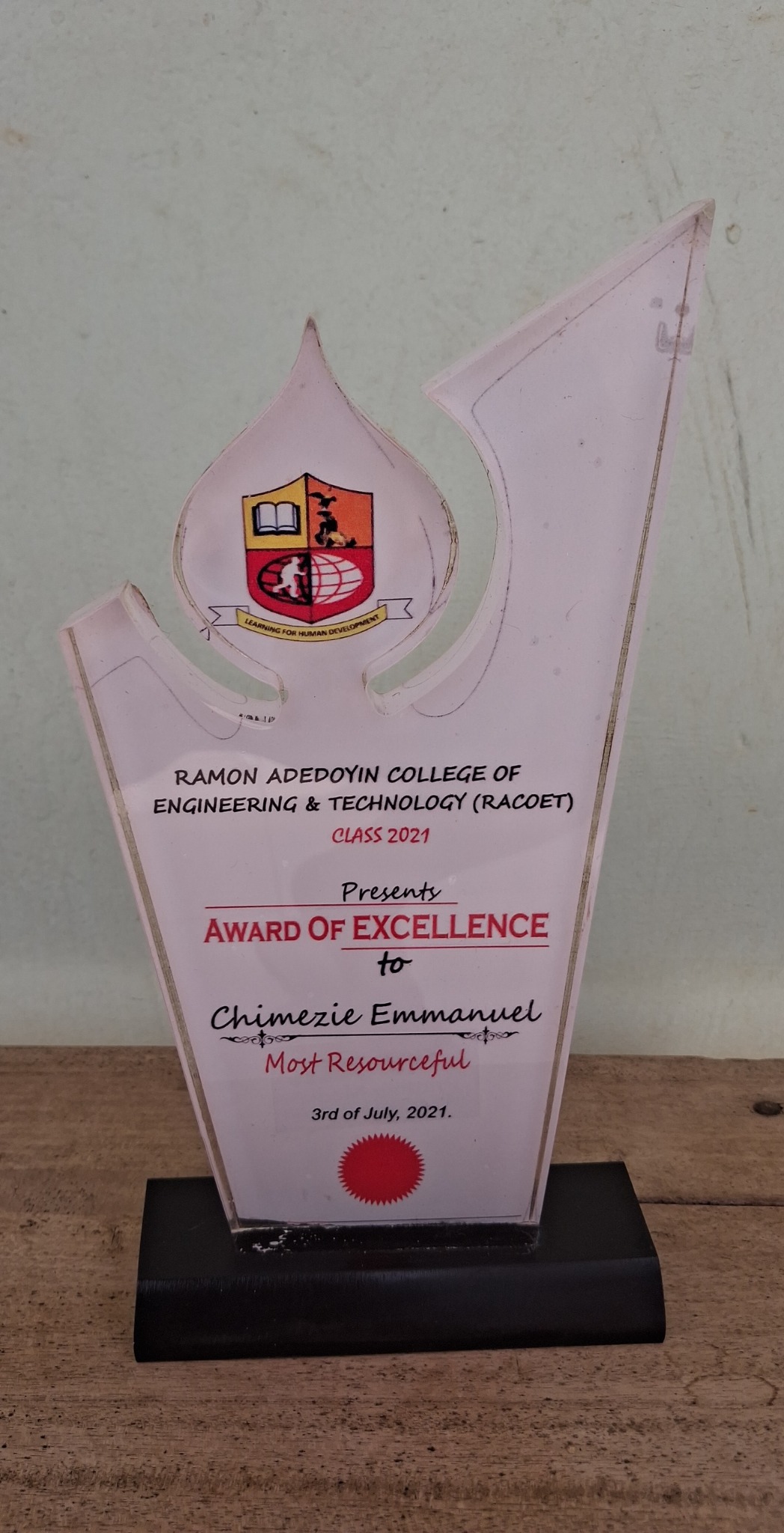
- Most Resourceful Student
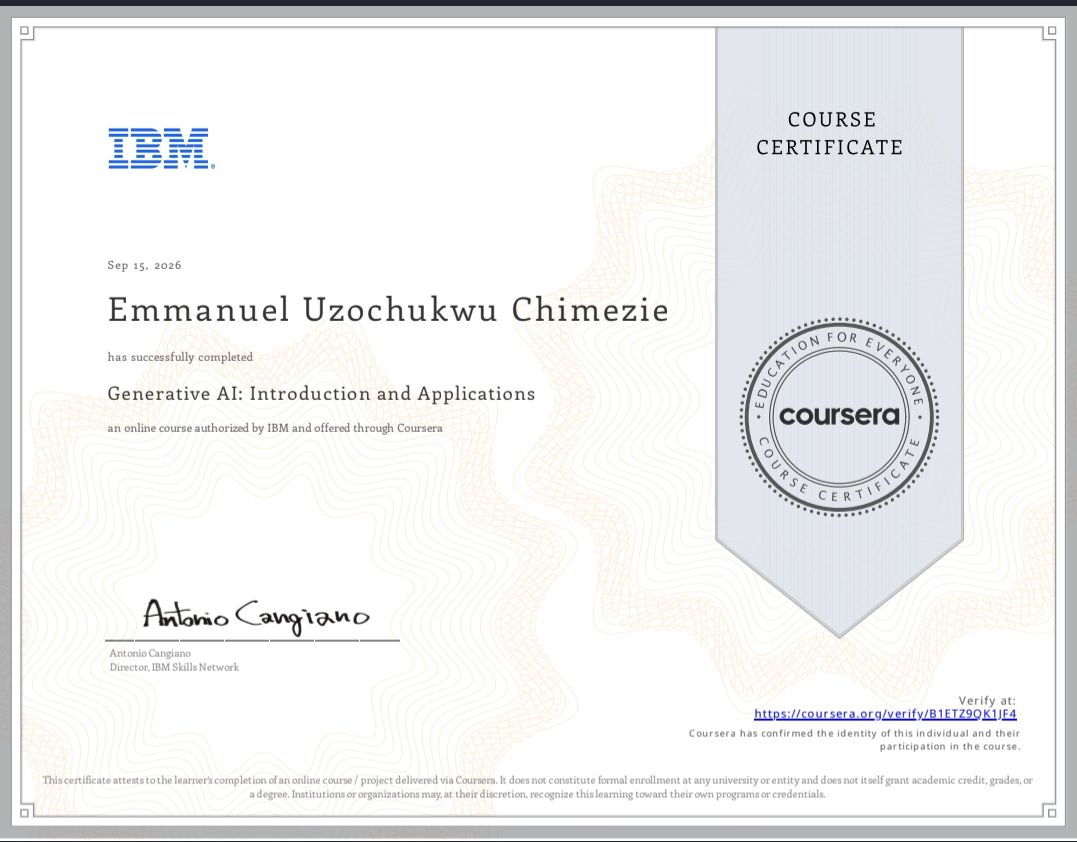
- Generative AI
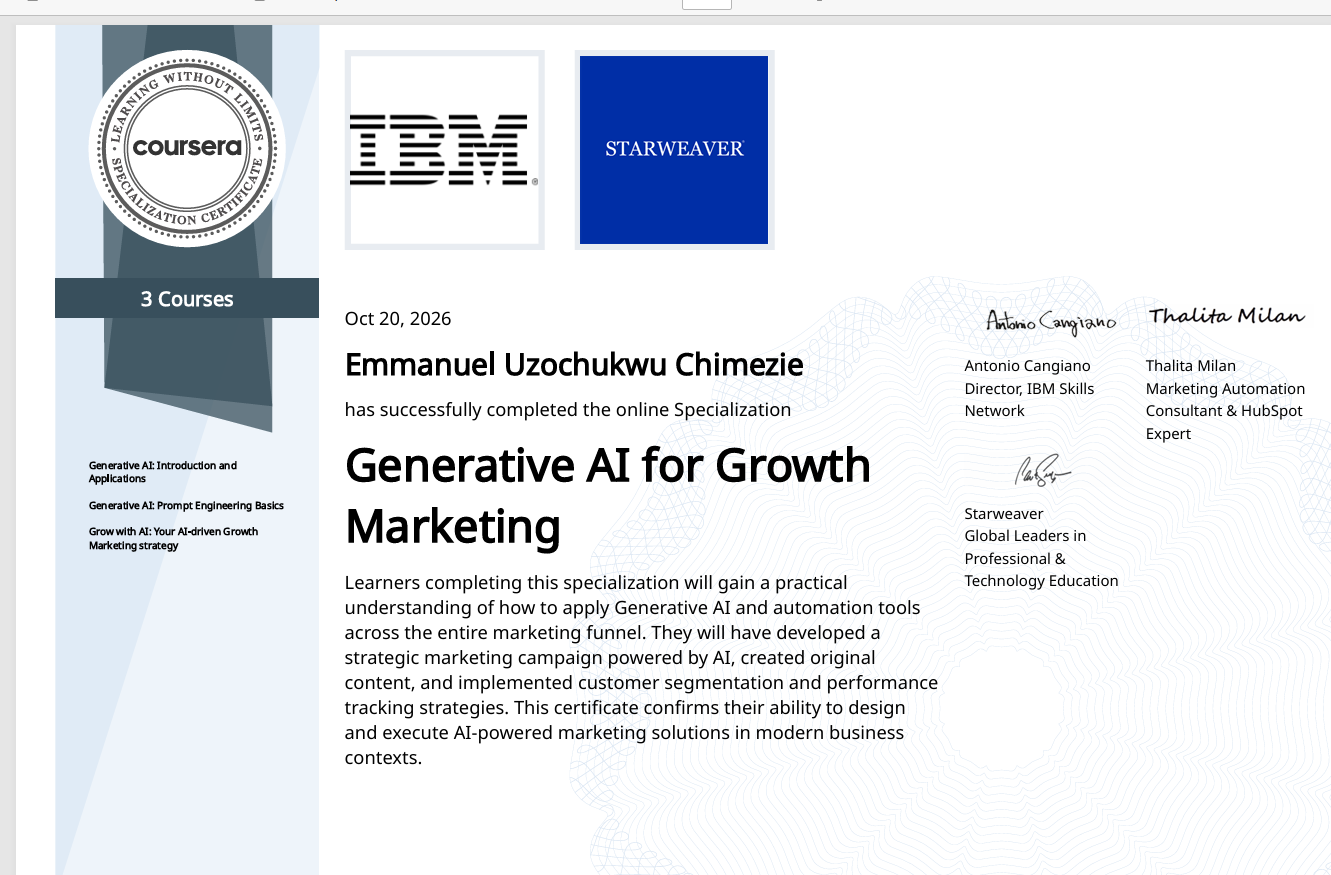
- GEN.AI-for growth marketing
- GEN.AI- The future of UIUX design
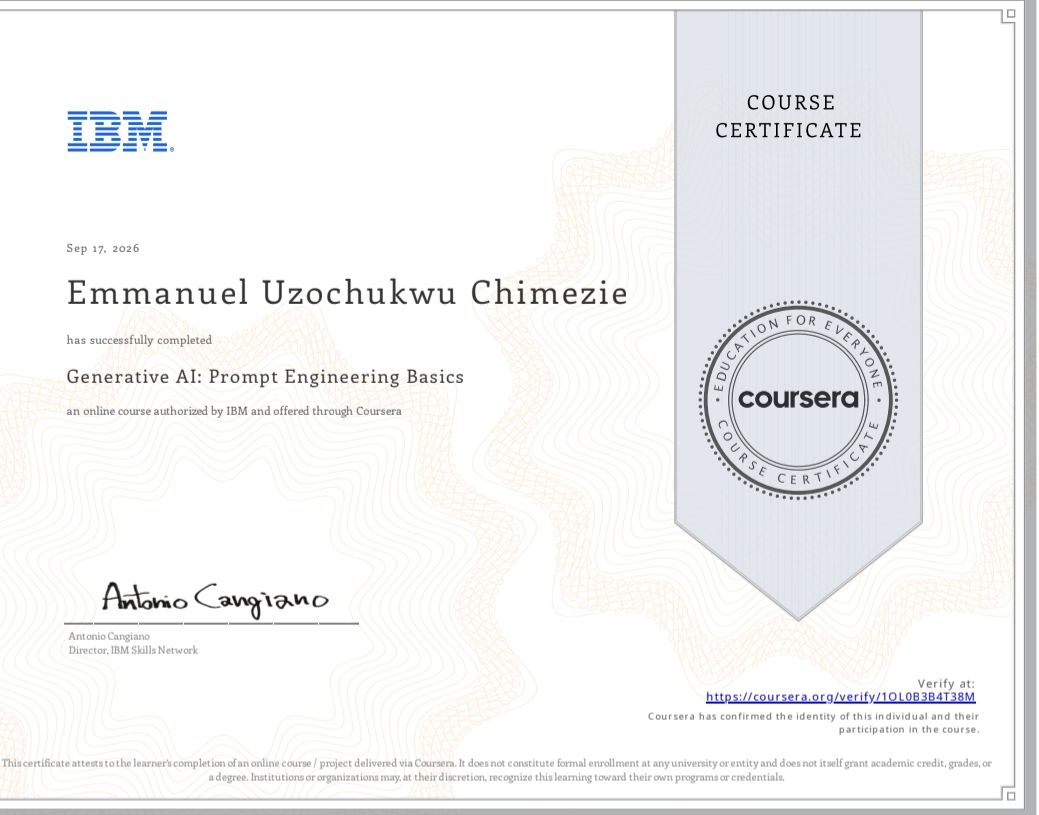
- AI Prompt Engineering
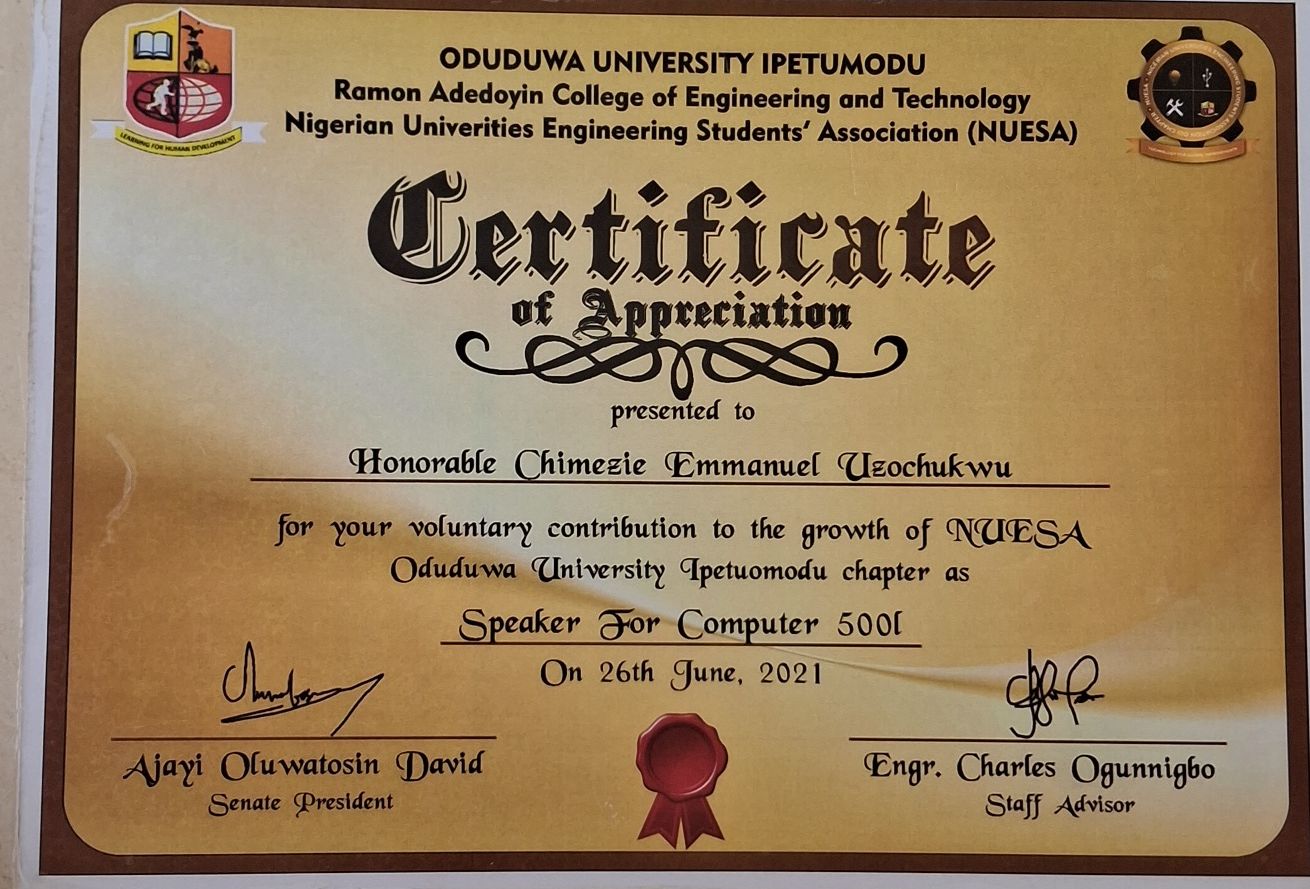
- Speaker for Computer Engineering
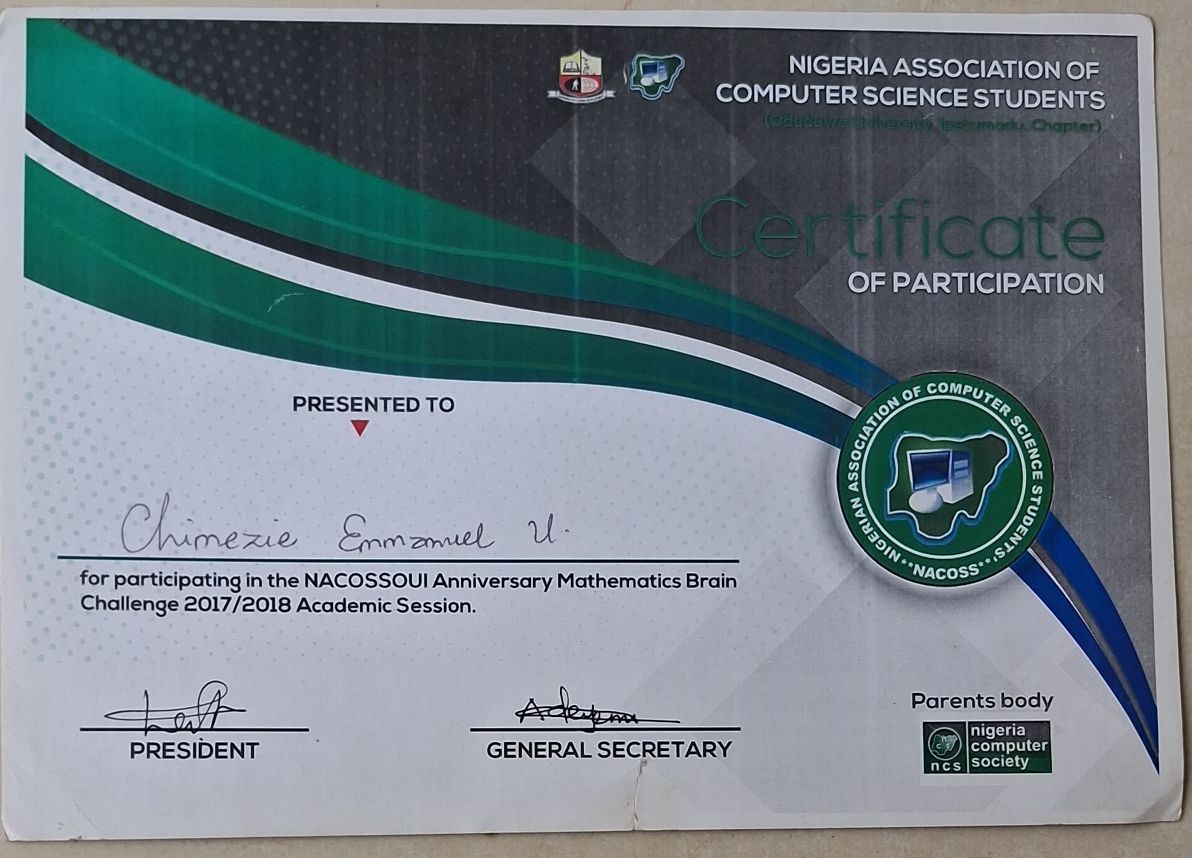
- Mathematics Brain Challenge Winner
- University degree certificate
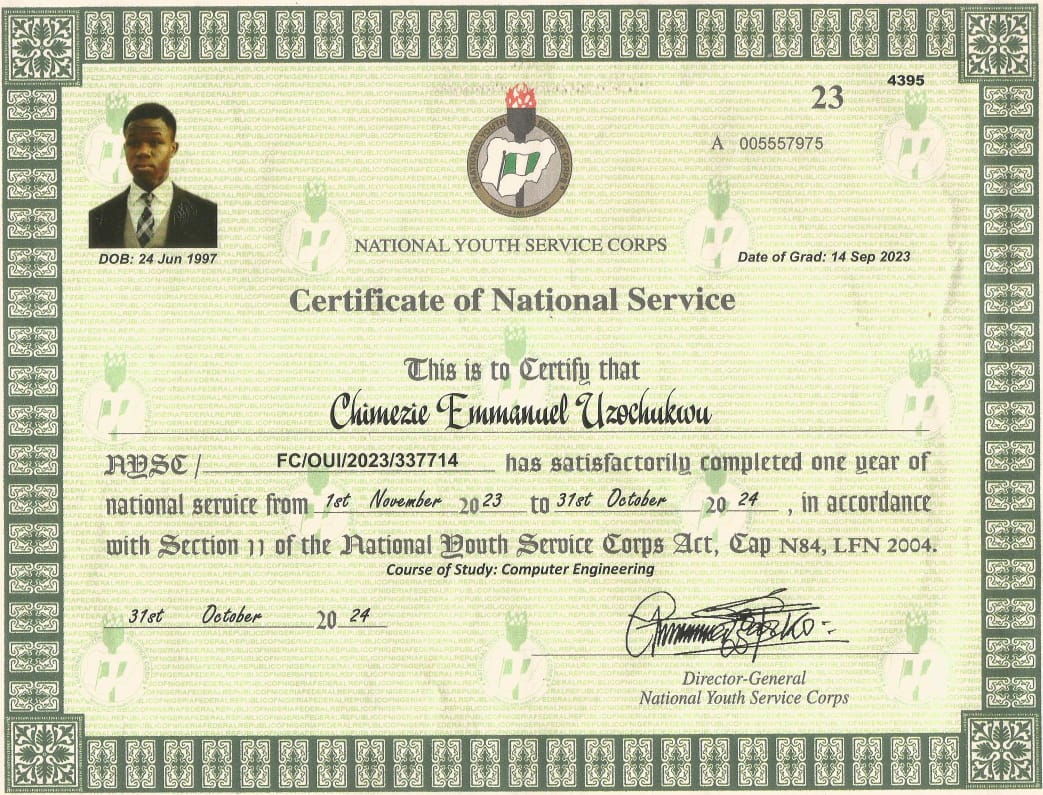
- NYSC
Files downloadable
Let's build something
Open to AI Engineering, Prompt Architecture, and AI Application Development roles. Reach out and let's talk.